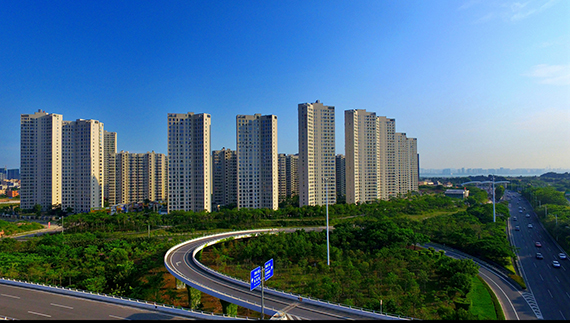
Established on October 19, 2003, the administrative division area of Xiang'an District is 546 square kilometers (total land area of 421 sqkm and a sea area of 134 sqkm), with seven streets and two towns under its jurisdiction. Xiang'an District encompasses 128 villages and communities, with a permanent population of 690,000 residents. Known for its superior living environment, excellent business climate, prioritized talent support, and favorable development conditions, Xiang'an is emerging as a modern, eco-friendly coastal area with high starting points and standards in planning and construction.
I. Distinct Geographic Advantages
Situated in the eastern part of Xiamen, Xiang'an is at the heart of the Minnan "Golden Triangle," connecting eastward to Quanzhou and westward to Tong'an, with views towards Kinmen to the south. It is the closest point on the mainland to Kinmen, offering extensive reach and strong gravitational pull. Xiang'an boasts an 87-kilometer coastline, accounting for 37% of Xiamen's total, and an ecological control area of 202 square kilometers, which makes up nearly 50% of the district's land area and nearly 20% of the entire city.
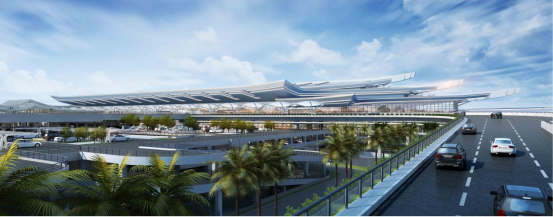
Relying on its unique location, Xiang'an District has built up a convenient three-dimensional transportation pattern by sea, land and air, comprising the Second Eastern Passageway, Xiamen Xiang'an Airport(In operation by 2026), Xiang'an Tunnel, National Highway 324, Shenyang-Haikou Expressway, and Fuzhou-xiamen High-speed Railway, which constitutes a convenient traffic network outwards. In particular, the successful opening of the Xiang'an Tunnel in 2010 enables access to major transportation hubs such as Xiamen Airport, Dongdu Port and Railway Station within 30 minutes.The Xiang'an Bridge opened in 2023, providing a five-minute cross-island route.
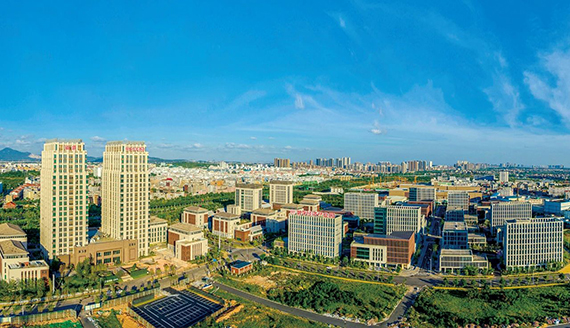
With the highest density of rail transit in Xiamen
The dense area of rail service in the Transportation Hub on the Western Coast of Taiwan Strait: As shown in the Xiamen metro line planning scheme, there will be several intra-city and inter-city rail lines running through Xiang'an in the future, making it the district with the densest layout of rail lines among the districts outside the island. The rail transit construction will give wings to Xiang'an to soar in development.
Among them, Line #3 connects two city centers, i.e. Xiamen Island and Xiang'an, and runs from Xiamen Railway Station in the south to Xiamen (Xiang'an) International Airport in the east, with 26 stations in a length of 36.73 km. It is expected to be opened to traffic in 2021.Officially opened in June 2021.
Line #4 connects four districts outside Xiamen Island and bridges three transportation hubs, i.e. the port, Xiamen North Railway Station and Xiamen (Xiang'an) International Airport. It serves as the backbone of Xiamen's round-bay trunk fast line off Xiamen Island and Construction has started now.
Transportation Hub on the Western Coast of Taiwan Strait: Xiamen (Xiang'an) International Airport
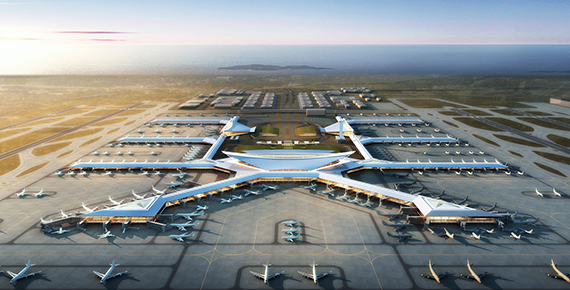
Functional positioning: The Xiang'an Airport, envisioned as a hub that "radiates towards Taiwan, connects nationally, links the Maritime Silk Road, and faces the world," will be operational by 2026. Xiang'an is actively pioneering in creating an international aviation hub and deepening cross-strait integration, supporting Xiamen in becoming a key city in the new development landscape.
Construction planning: Xiamen Xiang'an Airport features a runway length of 3,800 meters and is classified as a 4F grade flight area, the highest international standard. The current phase aims to achieve a passenger throughput of 45 million and a cargo throughput of 750,000 tons by 2026. This includes the construction of two widely spaced parallel runways and a 550,000-square-meter Terminal 1. The ultimate capacity will accommodate an annual passenger throughput of 85 million and a cargo throughput of 2 million tons.
II. Solid Industrial Foundation
Over the past 20 years since its establishment, Xiang'an has remembered its mission and seized the significant opportunity of "cross-island development." Through hard work and unity, it has transformed from a once "remote and underdeveloped" area into the main area and force of "cross-island development," becoming a key growth pole for Xiamen's high-quality development.
Xiang'an will accelerate the realization of five new leaps: new urbanization, high-quality industrial development, comprehensive regional competitiveness, high-quality living standards, and modernized social governance. The district strives to build an "Innovative Xiang'an, Prosperous Xiang'an, Ecological Xiang'an, Vibrant Xiang'an, and Happy Xiang'an," courageously advancing to contribute Xiang'an's strength to the high-quality development of Fujian and Xiamen.
2023 saw a year-on-year rise of 7% to 88.717 billion yuan in Xiang’an District’s GDP; 3.9% to 164.223 billion yuan in the gross output value of industrial enterprises above-designated size; 16.9% to 11.511 billion yuan in total fiscal revenue; -23.2% to 66.415 billion yuan in investment in fixed assets; 5.9%; to 14.252 billion yuan in total retail sales of consumer goods; 44% to 314.435 billion yuan in sales of wholesale and retail enterprises above designated size; and 4.8% to 445,25 yuan in per capita disposable income of all residents.
III. Broad Prospects for Development
The district is rapidly rising, with the urbanization rate increasing from 56.1% to 70.5%. Infrastructure is continually improving, with Metro Line 3 completed and operational, and Line 4 fully connected. Cross-island transport links such as the Xiang'an Tunnel and Xiang'an Bridge are now open to traffic. Major arterial road networks, including Xiang'an Avenue, Binhai East Avenue, and Haixiang Avenue, are well-connected. Significant public facilities like the Third Eastern Passage, the new Xiamen Sports Center, and the new Convention and Exhibition Center are rapidly progressing.
IV. Rich Industrial Platform
Relying on its own edges for development, Xiang’an will build a modern industrial system of "4+4+3". Efforts are focused on expanding the four traditional advantageous industries: flat panel displays, semiconductors and integrated circuits, new energy and new materials, and mechanical equipment manufacturing. Simultaneously, there is an accelerated development of key specialized industries such as biomedicine, aviation and aerospace, and marine high-tech industries. Additionally, emerging potential industries such as tourism and conventions, cultural and sports industries, and the digital industry are being cultivated and developed.
Having progressed for 18 years, Xiang'an has formed key industrial clusters of optoelectronic industry, integrated circuits, flat panel displays, semiconductor lighting, machinery industry and food industry, laying a solid industrial foundation. It also reserves a wide development room and has rich industrial platforms.
1. Xiang'an Southern Industrial Base Area
The Xiang'an Southern Industrial Base Area encompasses Dadeng Island, the region south of Xiangshan Green Corridor to the coastal line, covering an area of 98.6 square kilometers. The initial development zone spans approximately 21 square kilometers, bordered by Xiang'an South Road to the south (including the Xiamen University Xiang'an Campus and its surrounding areas), Nan'an City (Quanzhou) to the west, the estuarine area to the east, and Dadeng Island to the north. This area is planned to be developed into a comprehensive reform pilot zone, a science and technology innovation original zone surrounding Xiamen Bay, a pioneering zone for cross-strait integration, and a gateway city in the new development paradigm.
Based on Xiamen's "4+4+6" modern industrial system framework, this area will focus on four pillar industries: aviation, green energy and new materials, life and health, and new generation information technology. It will also support modern service industries, including cultural creativity, financial services, and technological services. The emphasis will be on cutting-edge technological innovations in fields such as hydrogen energy and energy storage, and semiconductors, aiming to establish the area as a source of technological innovation in the Bay Area.
Four Major Development Zones
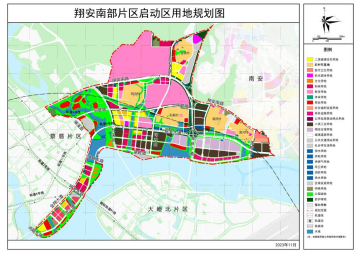
The initial development zone of the Xiang'an Southern Industrial Base Area is divided into four blocks (A, B, C, D) for development.
Block A Overview
North to Hongzhong East Road, west to Binhai East Avenue, east to the coastline, and south to Hongxiang East Road, covering an area of approximately 1.9 square kilometers. The block has convenient transportation, with Metro Lines 3 and 4 passing through, allowing access to Xiamen Island within half an hour. Leveraging its strategic location as a bay gateway and coastal scenic belt, it adopts the "industry + community" concept to attract residents from Fujian and Taiwan, creating a cross-strait exchange center.
Block B Overview
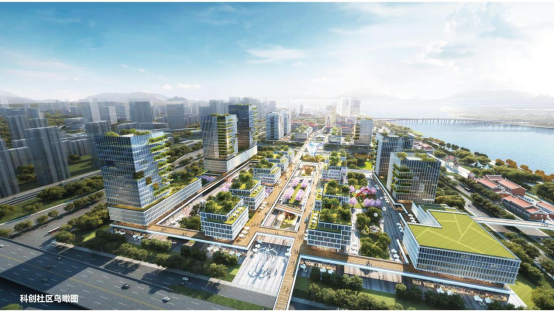
North to Xiang'an South Road and Lianhe Water System, west to Puxi Road, east to Shamai Road, and south to the coastline, covering an area of approximately 5.4 square kilometers. The block includes the Lianhe Area of Xiamen Science City and Jiuxikou Park and Jiuxikou Park. Xiamen Science City and Jiuxikou Park aims to support national strategies and regional development, focusing on breakthrough technologies and future industry growth, establishing itself as the "core engine" for building a high-quality, modern city. Jiuxikou Park features a garden-style cluster layout, incorporating wetland oases to restore nature, blending leisure, vacation, and cultural and creative industry functions.
Block C Overview
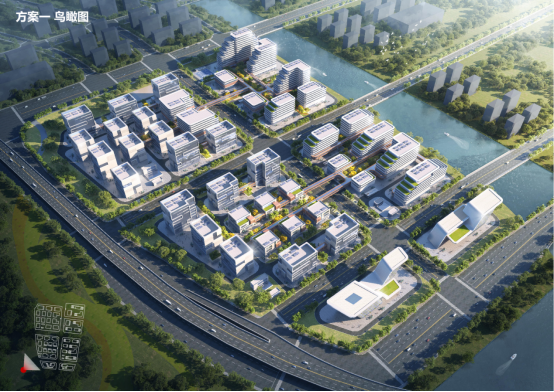
North and west to Xiamen University Xiang'an Campus, south to Lianhe Water System and Yanxiang Road, and east to Haixia Avenue, covering an area of approximately 7.9 square kilometers. Leveraging Xiamen University, the area aims to attract renowned institutions from Taiwan and globally, creating a virtual university that gathers world-class educational resources and a startup incubator for cross-strait youth. Utilizing the Tan Kah Kee Innovation Lab, it will introduce national key laboratories, forming a diverse space for scientific and technological innovation and incubation. The area will enhance the quality of space and public amenities, creating a leading zone for scientific and technological innovation and cross-strait integration around Xiamen Bay.
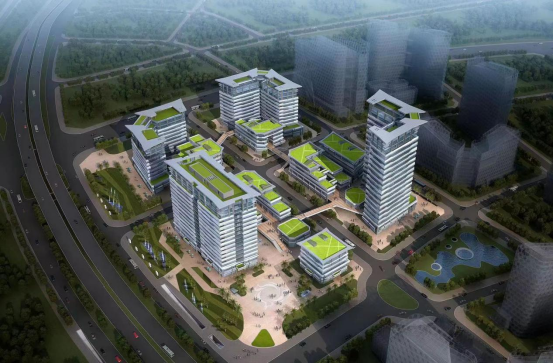
Block D Overview
North to Xiang'an South Road and Yanxiang Road, west to Shamai Road, east to the Xiang'an District boundary, and south to the coastline, covering an area of approximately 5.8 square kilometers. In conjunction with the construction of the Xiang'an Airport aviation economic zone, the area will apply for the establishment of a comprehensive bonded area. Focusing on aviation maintenance and manufacturing, international logistics and distribution, business and trade services and other airport industries, as well as next-generation information technology, intelligent equipment, science and education research and development and other high-tech industries.
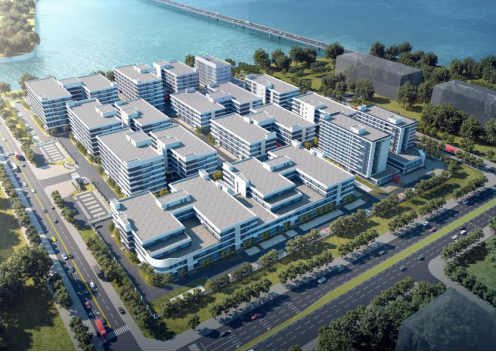
2. Xiang'an Industrial Base
Xiang'an Industrial Base is located along the Xiamen Bay development axis, stretching north to the Fuzhou-Xiamen Expressway, east to Xiang'an East Road, and south to the southern coastline of Xiang'an. The "Bay Ring, Facing the Sea" concept integrates into the Xiamen Bay Area, connecting the northern part of Xiamen Island and Tong’an Industrial Base, forming an interconnected network of rings, bays, groups, and centers. The area involves the four sub-districts of Xindian, Fengxiang, Jinhai, and Min'an, and is divided into four groups (Northern Group, Central Group, Southern Group, Jiuxi Group). It has a total planned area of 86.19 square kilometers, a developable area of 33 square kilometers, and a planned population of 1 to 1.2 million. As a core functional area of Xiamen's "Five Centers and One Base" and a gateway for coordinated development with southwestern Fujian, Xiang'an Industrial Base carries multiple functions including a comprehensive service center, sports and convention center, port area, industrial park, and cross-strait cooperation. It is a key development area in Xiamen's "One Island, One Bay" urban spatial structure and the only industrial base in Xiamen to pilot both "sponge city" and underground comprehensive utility corridor initiatives.
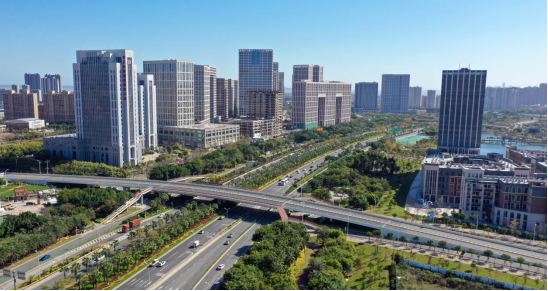
3. Xiang'an Area of Tongxiang High-Tech Industrial Base
Xiang'an Area of Tongxiang High-Tech Industrial Base has a planned area of 12.3 square kilometers, including the Shitou and Neicuo areas, with approximately 3.8 square kilometers of developed land (including plots and roads). It currently hosts 25 enterprises, such as CALB and Tianma Microelectronics, with an industrial population of approximately 43,000. Shitou Area covers 10.68 square kilometers and focuses on high-tech industries such as display panels, LED semiconductor packaging and testing, integrated circuits, and microelectronics. Key projects include Tianma's 6th and 8.6th generation lines, Huatian Hengxin's silicon carbide chips, Xingguang Runze's silicon carbide modules, and Epiworld's electronics. Neicuo Area covers 1.61 square kilometers, primarily hosting the CALB project.
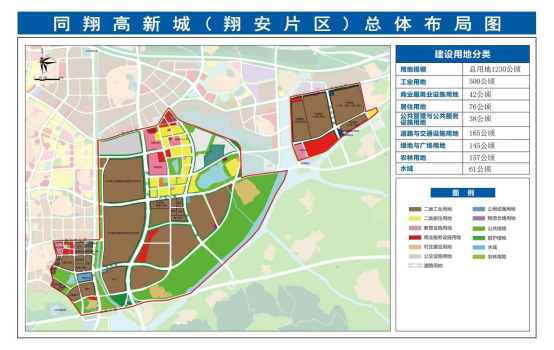
4.Airport area overview
This area is located in Xiang’an District, Xiamen City, with a total planned area of 33.81 square kilometers, including the core area of the airport, the northern area of Dadeng, and Xiaodeng Island. Xiang'an Airport is positioned as a major international airport of China, regional pivotal airport, and cross-strait exchange gateway airport. The industry plan for this area targets the transformation from "city airport" to "airport city". This area is focused on building a three-dimensional industrial system composed of air transport, aviation science innovation and the modern service industry. Its nine development priorities include air transport services, air cargo logistics, aviation maintenance, aviation manufacturing, air sci-tech manufacturing, cultural tourism and leisure, supporting living facilities, international trade and the headquarters economy.
The new town covers a total area of 53.11 sq.km, comprising Caicuo Area, Lianhe Area, Dadeng North Area and Airport Core Area. It will capitalize on the capacity of Xiang'an International Airport as the regional transportation hub to aggressively develop air bonded logistics, aircraft financing and leasing, port operation, bonded aviation material storage and transportation, bonded trade and display and other airport industries to build an airport industrial chain.
5. Xiamen Science and Technology Park Xiang'an Lianhe Area
Lianhe Area of Xiamen Science and Technology Park extends east to the Airport Comprehensive Bonded Zone, west to Jiuxi Wetland Park, south to Binhai Park Avenue, and north to Xiangshan. The planned Ocean Engineering University is included within Xiamen Science and Technology Park. The total land area is 771 hectares, with 595 hectares designated for construction.
This area focuses on key industries such as biomedicine, new materials and new energy, semiconductor equipment, and aerospace. It aims to build a "scientific research highland, innovation center, and city of the future," accelerating the construction of a world-class science and technology park.
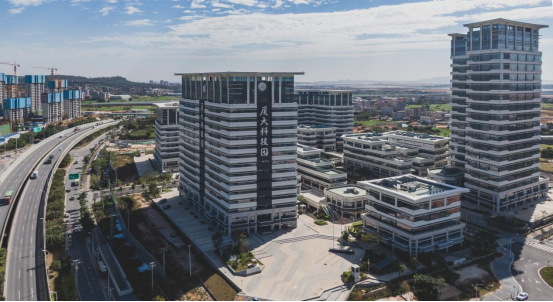
The Xiamen University National University Science Park is a key component of Xiamen Science and Technology Park. It is officially recognized as a national university science park by the Ministry of Science and Technology and the Ministry of Education, and it is a key project for Fujian Province, Xiamen City, and Xiamen University. The park is located south of Xiamen University's Xiang'an campus, covering 69 acres with a total construction area of 190,000 square meters, consisting of four plots with ten buildings, including four high-rise and six multi-story buildings. Main facilities include: 110,000 square meters of scientific research and development space; 20,000 square meters of commercial support; 55,000 square meters of underground parking, providing 1,338 parking spaces. The park relies on Xiamen University and focuses on five core industries: biomedicine, marine ecological environment, new energy and new materials, artificial intelligence and big data, and integrated circuits. It serves as a platform for the transformation of scientific and technological achievements from Xiamen University and a base for entrepreneurship for its faculty and students.
6. Fengxiang Industrial Base
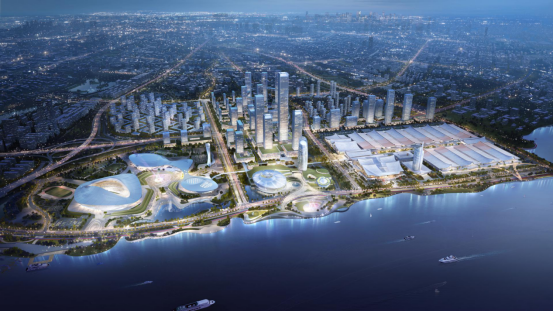
Fengxiang Industrial Base is located in the southern coastal area of Xiang'an District, with a planned area of 6.58 sq.km, facing Wuyuan Bay across the sea from Xiamen Island.
it stands as the eastward bridgehead for Xiamen’s cross-island development. The industrial base boasts a prominent location advantage, stunning bay and sea natural landscapes, convenient and efficient transportation, and abundant ecological resources. Aiming to enhance the internationalization, high-end development, and market-oriented level of Xiamen's convention and sports industries, Riding on the two development engines of the new sports center and the new conference & exhibition center in the future, it will be built into a new coastal town and a benchmark of “industry-city-people” integration comprising such composite functions as sports events, tourism exhibition, business office, culture and entertainment, interactive experience and high-end residence.
7. Xiamen Marine High-tech Industrial Park
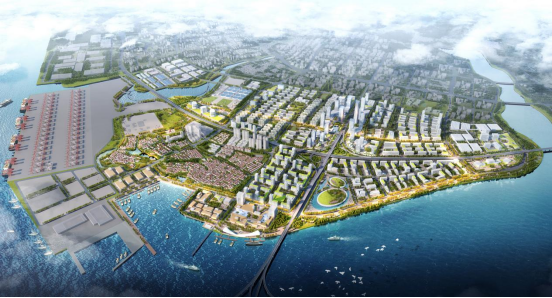
Lying within the Liuwudan Port Area of Jinhai Street and the existing Oucuo Fishing Port, Fengxiang Industrial Base's planned area extends east to Gangcha Park, south to the sea, west to Xiang'an Avenue, and north to Hongxiang South Road, Xiamen Marine Hi-tech Industrial Park covers a total land area of about 10.27 sq.km(including approximately 12.9 square kilometers of sea area) and a total coastline of about 10 kilometers. It is dominated by three major industries of marine shipping, marine high technology, and marine cultural tourism, and is composed of 4 clusters: modern fishery and recreational tourism cluster; modern shipping logistics cluster; marine high-tech industry cluster; supporting service cluster.The base focuses on developing a "6+2" industrial system, which includes marine biomedicine and products, high-end marine equipment and new materials, marine information and digital industries, fishing port economy and marine seedling industry, marine cultural creativity and high-end coastal tourism, and blue carbon and comprehensive seawater utilization. These sectors are supported by marine research and innovation carriers and the marine headquarters economy.
8. Xiang'an Digital Economy Industrial Park
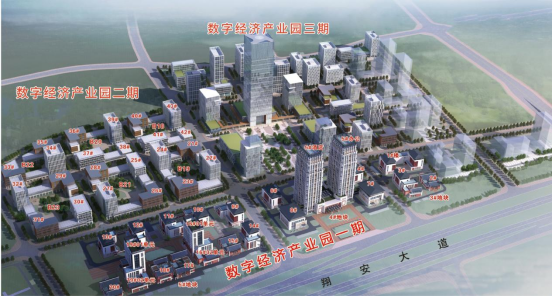
Located in the core area of Xiang'an, the Xiang’an Digital Economy Industrial Park is well-connected by major transportation hubs such as Xiang'an Avenue, Xiang'an Tunnel, and the metro system. The park includes a bus terminal with five bus lines linking nearby metro stations, seamlessly integrating with both the island and mainland. the park has a total land area of 180,900 sqm and a planned floor area of 566,200 sqm, with a total of 311,100 sqm already completed in Phase I and Phase II. One of the core clusters, the "Healthy Xiang’an Smart Valley", is an important carrier and platform for the development and incubation of the health care industry by actively establishing the ecosystem of big health data industry.Phase III is currently under schematic design, with a land area of 69,000 sqm , The primary functions of the park include offices, apartments, and commercial spaces.